Last updated 2026-08-19
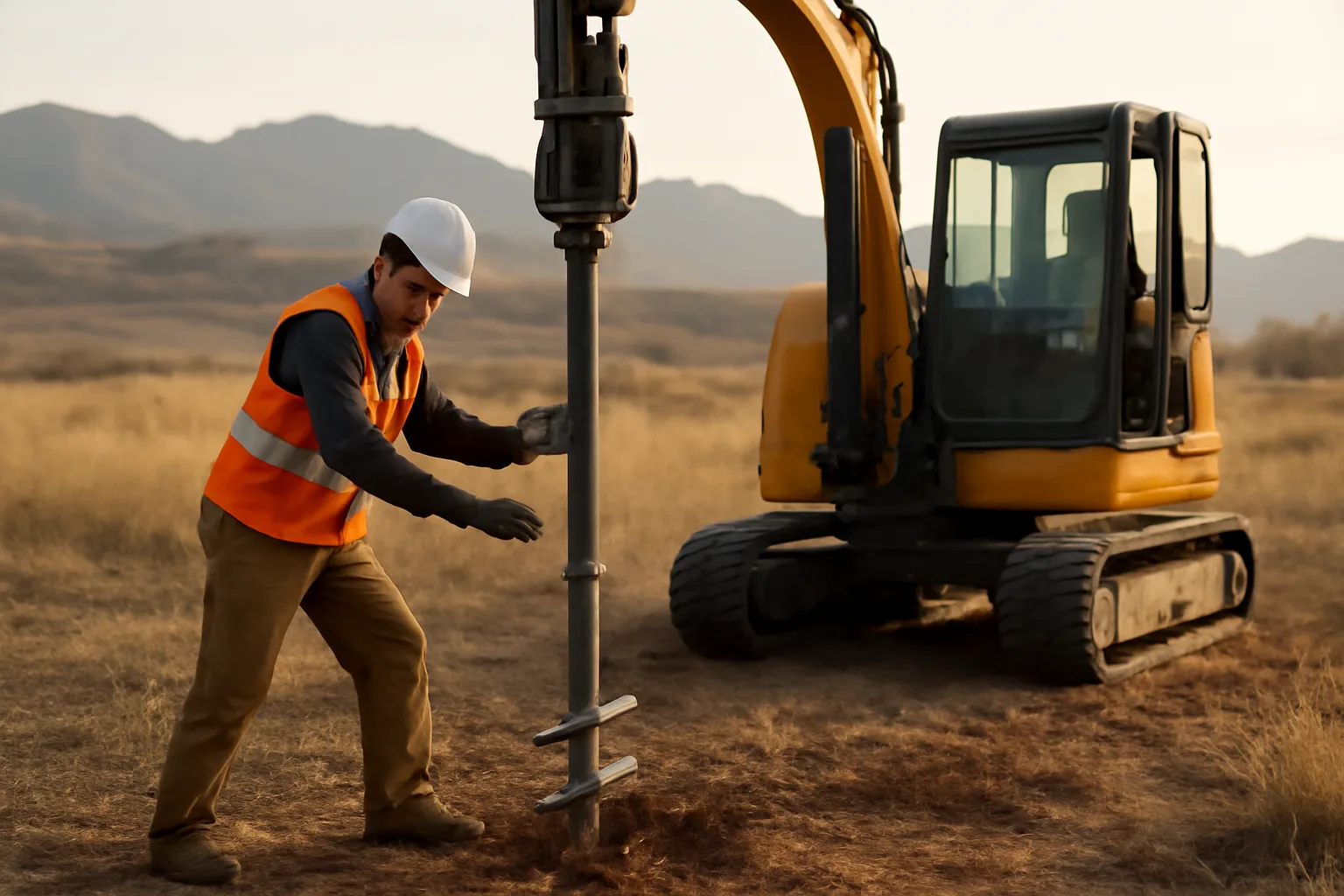
TL;DR
Colorado does not sell a helical pier license. Form an entity with the Secretary of State, open the tax accounts your sales actually trigger, then get a contractor card in each city that requires one. Most jobs need a building permit and a Colorado PE design. On-site work is usually days. Confirm every fee and form with the city and the relevant board.
Do you need a license for helical pier in Colorado?
Colorado does not issue a statewide helical pier license. It also does not issue a statewide general contractor license that covers foundation repair or new-construction piles. You still cannot roll up with a drive head and start spinning steel. You need a filed business entity, tax accounts that match how you sell, a contractor license in each city that requires one, a building permit for the job, and a Colorado licensed professional engineer whenever the work is the practice of engineering.[2][3][10][14]
That surprises people who moved from a state-board system. Colorado leaves most construction licensing to home-rule cities and local building departments. The state will not mail you a helical card.
So do you need a license? Yes, locally, in most of the places you will actually want to work. Denver requires contractor licensing before you pull many building permits. Colorado Springs does too. Other Front Range cities run their own lists. Unincorporated counties can be looser, or they can surprise you on the first inspection. Confirm with the building department that will look at the piles, not with a Facebook group.[10][11]
A manufacturer installer certificate is not a Colorado license. Neither is an ICC exam card. Those papers help you talk to engineers and warranty desks. They do not replace a Denver contractor license.
If you only want the license map, use the companion page on the helical pier license in Colorado. This article is the full start path, including first-year operations.
I'd treat any national helical license pitch as noise. There is no such thing.
What paperwork should you file first with the state?
File the entity first. Most people form a Colorado LLC or corporation with the Secretary of State under Title 7. Articles of organization (or incorporation) create the legal person that will hold licenses, insurance, and contracts. Confirm the current filing method and fee on the Secretary of State's business pages before you pay a third-party mill. Fees change. Blog timelines go stale.[2]
Pick a name you can actually use in the cities you care about. Then get an EIN from the IRS if you need one for a bank account or employees. Use the IRS EIN application and read what it says. I am not reciting IRS clocks here.
Sell tangible personal property or provide a taxable service in Colorado, and you need a sales tax license from the Department of Revenue. The Department's sales tax license page is the document to follow, not a podcast.[1]
Do not buy a dedicated pile machine the week you file articles. Paper first. Equipment second. You will change your mind about service area once you see which cities make you sit for an exam.
A periodic report keeps the entity in good standing. Confirm the due date with the Secretary of State. A lapsed entity creates ugly permit and contract problems later, usually on a Thursday when you needed to pull a permit.
Which Colorado cities license helical pier contractors?
Denver publishes a contractor licensing process, including how to apply. If you plan to work inside Denver, start there and confirm the license class that matches foundation and building work. Do not assume a specialty pier class exists with that name. Match your actual scope to the city's published classes.[10]
Colorado Springs keeps a contractor licensing page under Planning and Development. Same drill. Read the class list. Ask the city which license pulls a helical pier permit. Get the answer in writing if you can.[11]
Aurora, Boulder, Lakewood, Fort Collins, and other home-rule cities run their own shops. I am not going to fake their fee tables. Call the building department, ask two questions, and write down the names. Question one: what contractor license do I need to install helical piles? Question two: what permit and inspection sequence do you want?
Unincorporated parts of Adams, Arapahoe, Douglas, El Paso, Jefferson, and Weld can differ from the city next door. The county building official is the authority having jurisdiction there.
Reciprocity is not a Colorado statewide thing for this trade. A helical pier license in Arizona or a helical pier license in California does not automatically open Denver. You may get some exam credit in a city. Confirm. Never bid a city on the hope that your out-of-state card gets honored.
If I were starting tomorrow, I would pick two AHJs, get licensed there, and refuse work outside those lines until the paper is clean.
| Layer | Who sets it | What you confirm |
|---|---|---|
| Legal entity | Secretary of State | Articles under Title 7 |
| Sales tax | Department of Revenue | License if you make taxable sales |
| Employer accounts | CDLE and DOR | UI, withholding, workers' comp if you have employees |
| Contractor card | City or county | Class that can pull the helical permit |
| Design | Colorado PE board plus the job PE | Stamped calculations and details |
| Job permit | Local building department | Inspection of the installed piles |
How much does helical pier cost in Colorado?
Nobody publishes a trustworthy statewide average for helical pier cost in Colorado. Anyone who gives you a single per-pier number without soils, access, load, and corrosion details is guessing. I would ignore that number.
Your price is a bid, not a menu. It carries steel (leads, extensions, brackets or new-construction caps), mobilization of a drive platform, labor, torque monitoring, cutoff and connection hardware, PE design and special inspections if required, permits, and the risk that Front Range claystone or undocumented fill makes you add extensions.[5][8]
Residential underpinning and new-construction piles are different products. Underpinning an older Denver bungalow with poor access is nothing like spinning piles for a new garage slab on a wide lot. Mixing those into one Colorado price is how contractors go broke.
Steel moves. PE fees move. City permit fees move. Confirm current permit fees with the AHJ. I will not invent them.
If a homeowner asks how much helical pier costs in Colorado, give a range only after you have a scope. Talk about pier count, depth uncertainty, and whether a geotechnical report exists. Colorado Geological Survey materials make clear that swelling soils are a real design problem here, not a sales story.[8]
I would rather lose a bid than print a fake dollar-per-pier figure on a flyer.
How long does helical pier take in Colorado?
How long helical pier takes in Colorado depends on which clock you mean.
The business clock: an entity filing can be quick. City contractor licenses run on a different clock. Some cities test you. Some want insurance certificates, experience affidavits, or a qualifying supervisor. Confirm processing with that city. I will not promise you a week or a month. Blogs that do are guessing.[10][11]
The job clock: once design and permit are in hand, many residential pier installations are field work measured in days, not seasons. Depth, access, utilities, and weather stretch that. After a wet week, expansive clays get ugly. In January, freeze and snow access can stop a small crew.
The design and permit clock often beats the drill clock. A PE needs soils information and loads. The building department needs drawings that match what they adopted from the International Building Code soils and foundations chapter.[4]
If a salesperson says they will save the house tomorrow, they are selling. Competent work waits on locates, a plan, and an inspection sequence.
For a new company, I would plan months to get paper and relationships in place, then days on a typical permitted residential set. That is an opinion, not a board timeline. Nobody has good public data on Colorado helical production hours. Your torque logs and hour sheets will be the closest study you ever get.
Do helical pier jobs need a PE stamp in Colorado?
If you size piles, produce capacity calculations, or issue drawings that other people rely on as engineering, you are in PE territory. Colorado regulates the practice of engineering through the Board of Licensure for Architects, Professional Engineers and Professional Land Surveyors. The statutes live in Title 12. Practicing without a license is not a paperwork nit.[3][14]
The International Building Code, which local Colorado jurisdictions adopt in some edition, treats helical piles as deep foundations. IBC says: "Helical piles shall be designed and manufactured in accordance with accepted engineering practice to resist all stresses induced by installation into the ground and service loads." That sentence is why "we always use 10 foot leads" is not a design.[4]
ICC-ES AC358 is the acceptance criteria engineers use for helical pile systems. It is not a contractor license. It is the rulebook for recognition of those products under the IBC.[5]
Can a contractor install piles under a PE's stamped drawings? That is the normal pattern. You still need the local contractor license and the permit. You do not get to swap the PE's details in the field because the torque felt high.
I would not open a helical company in Colorado without a working relationship with a geotechnical or structural PE who already stamps this work. Cold-calling engineers after you have a deposit is how projects stall.
What permits, inspections, and 811 rules apply on site?
Almost every helical job that supports a building needs a building permit from the local department. The department inspects to the code it adopted, usually an IBC edition plus local amendments. Chapter 18 covers soils and foundations, including deep foundations in Section 1810.[4]
Special inspection can show up on helical piles, depending on the building official and the design. Read the permit. Do not argue from a different city's habit.
Call Colorado 811 before you spin steel. Hitting gas on a residential underpinning job is a career event. Public locates will not mark private irrigation, shed feeds, or old yard lines. Budget time to pothole.
OSHA still applies in the hole and next to the hole. Excavations for pile caps, grade beams, or underpinning pits are excavations. OSHA requires a competent person to inspect excavations daily. The text is blunt: "Daily inspections of excavations, the adjacent areas, and protective systems shall be made by a competent person for evidence of a situation that could result in possible cave-ins, indications of failure of protective systems, hazardous atmospheres, or other hazardous conditions."[6][7]
Cutting steel or working in dust? The OSHA silica construction rule can apply too. Read 29 CFR 1926.1153 rather than hoping helical work is magically exempt.[15]
I treat inspection day as part of the production schedule, not an interruption.
What insurance, tax, and employer accounts do you need?
If you have employees, Colorado workers' compensation statutes in Title 8 require you to secure compensation. Confirm coverage questions with the Division of Workers' Compensation and your carrier. Sole-member setups and true independent contractors are fact-specific. I would not run a crew on a handshake and a hope.[12]
Unemployment insurance and wage withholding show up when you have employees. The Department of Revenue handles wage withholding. CDLE handles UI. Confirm thresholds and registration on those agencies' employer pages. I am not printing a registration deadline that might be wrong next quarter.
General liability and installation coverage are not optional if you want to work for serious PEs or GCs. Cities often ask for certificates that name them. Confirm limits with the city license application, not with a template you found online.[10][11]
Colorado mechanic's lien rights live in Title 38, Article 22. If you furnish labor or materials to improve real property, the lien statute is how you sometimes get paid. Deadlines are unforgiving. Read the statute or hire a construction lawyer. This site is not your lawyer.[13]
Sales tax again: if your contract mixes taxable materials and labor, get the Department of Revenue treatment right on the sales tax license page.[1]
I would budget more for insurance and a construction lawyer's one-time contract review than for fresh vinyl on the truck.
Why do Front Range soils change helical pier design?
Front Range work sits on expansive clays and claystone more often than coastal contractors expect. The Colorado Geological Survey treats swelling soils as a major geologic hazard and publishes a swelling soils hazard page for the public. Read it before you write a warranty.[8]
Helical piles transfer load below the active zone when the engineer designs them that way. That is the point. Depth is not a marketing slogan. It is a calculation tied to soils and structure.
Undocumented fill along older Denver parcels, collapsible soils in some districts, and high water near creeks all change torque and length. Manufacturer torque-to-capacity correlations in an AC358 evaluation report only work if you install the system they evaluated.[5]
I would refuse a "just add piers under the garage" job with no soils information and no PE. That is how you inherit someone else's heave.
Snow load, seismic design category, and frost depth are local code questions. Ask the AHJ what edition and amendments they use. Do not copy a Boulder detail onto an El Paso County permit set.
Helical pier Colorado work is a soils business that happens to use steel. Treat it that way and your first year hurts less.
What equipment is worth buying in year one?
Year one, I would rent or buy a used skid steer or mini excavator and a hydraulic helical drive head with a real torque readout you can log. A brand new high-horsepower dedicated machine looks great in photos. It is a heavy payment if you only have two city licenses and no PE pipeline.
You need leads and extensions in the diameters your PE actually specifies, new-construction plates or underpinning brackets, cutoff tools, a torque log method that matches the evaluation report, and basic layout gear. Untraceable steel is a gift to the opposing expert if a job goes bad.
Do not cheap out on the torque measurement. AC358 based designs live and die on installation records.[5]
Trailers, trench protection for pit work, and winter ground protection matter more in Colorado than another decal. OSHA cave-in protection is not optional because the pit felt shallow if the competent person says otherwise.[7]
Manufacturer training days are worth the trip. A pricey sales system is not. Learn to keep a clean log before you learn to run ads.
How should you bid helical pier work in Colorado?
Bid from the drawings, the soils, and a written scope. Torque criteria, minimum depth, corrosion, and connection hardware should be on the PE set. If they are not, you do not have a bid package yet.[4][5]
Build the number as mobilization, estimated installed length (with a contingency you can explain), brackets, labor hours, PE and permit passthroughs, and a risk line for bad fill. Then stop padding mystery percentages you cannot defend.
Want worksheets for stamps and bid math? HelicalPath sells a $199 one-time Stamp + Bid-Math Kit at /start. It is a publisher kit, not a license and not a city approval. You can do this whole path with a spreadsheet you already own.
Compare your production assumptions to reality after the first three jobs. Nobody has clean public data on Colorado helical production rates. The closest honest method is your own torque logs and hour sheets.
Out-of-state pricing habits fail here. How to start helical pier in Arizona is a different paper path and a different soil story. Same for how to start helical pier in California. Steal their discipline, not their unit prices.
What first-year moves are a waste of money in Colorado?
Waste of money: statewide lead-gen services that send you unpermitted foundation crack leads in cities where you are not licensed. Waste of money: wrapping three trucks before you have a PE who will stamp your work. Waste of money: promising lifetime warranties that ignore CGS swelling soil behavior.[8]
Also a waste: paying a consultant to handle all Colorado licensing as if one filing covers Denver, Colorado Springs, and a county. It does not.[10][11]
Worth the money: a construction lawyer to review your subcontract and your homeowner contract once. Worth it: a bookkeeper who has filed Colorado sales tax. Worth it: manufacturer training that teaches you to keep an AC358-compatible log.[5]
I would not join every association in month one. Sit in on a local structural engineers meeting if they will have you. Bring questions, not flyers.
Colorado is a local-license state for this work. Alabama, Alaska, Arizona, and California each mix state boards and local permits differently. If you are comparing paper, read how to start helical pier in Alabama or how to start helical pier in Alaska as separate problems. Do not paste their checklists onto a Jefferson County job.
What Colorado gives you is speed on the entity and a lot of city-by-city homework. What it does not give you is a single board that can say you are licensed for helical pier in Colorado.
Keep records like you will be deposed. Torque logs, 811 tickets, inspection sign-offs, PE sketches, and change orders. Title 38 lien rights will not save a sloppy file.[13]
HelicalPath is an independent publisher. We are not a law firm and not a service company. Confirm every variable fee, class name, and form with the Secretary of State, the Department of Revenue, the PE board, and the city that will inspect the steel. If you want the bid worksheets, they are at /start.
Frequently asked questions
Do you need a license for helical pier in Colorado?
There is no statewide helical pier license and no statewide general contractor license for this work. You still need a filed entity, tax accounts that match your sales, and a contractor license in cities such as Denver and Colorado Springs. Most building jobs also need a permit and a Colorado PE design. Confirm the class with the AHJ that will inspect the piles.
How much does helical pier cost in Colorado?
There is no reliable published statewide average. Cost is a bid built from steel, mobilization, labor, torque monitoring, PE and permit fees, and depth risk in expansive clay or fill. Residential underpinning and new-construction piles price differently. Confirm permit fees with the city. Ignore any flyer that prints one dollar-per-pier number for the whole state.
How long does helical pier take in Colorado?
Entity filing can be quick. City licenses take whatever that city takes, so confirm with the board and do not trust blog clocks. Once design and permit are in hand, many residential installs are days of field work. Design, locates, and weather often exceed drill time. I would not promise a one-day rescue before seeing access and soils.
Can I install helical piers with only a manufacturer certificate?
No. A Chance, Magnum, Ideal, or similar installer card is useful for torque logs and warranties. It is not a Denver or Colorado Springs contractor license and it is not a PE stamp. Use the certificate as training proof. Still file the entity, still license in the city, still pull the permit.
Do I need a PE if I only install and do not design?
Installation under a Colorado PE's stamped drawings is the usual pattern. You still cannot invent capacities in the field. Title 12 regulates the practice of engineering. If you size piles or issue calculations others rely on, you need a licensed PE. Confirm scope questions with the Board of Licensure for Architects, Professional Engineers and Professional Land Surveyors.
Does a homeowner permit cover my company?
Usually no. A homeowner permit, where a city even allows one, is not your contractor license and often restricts who may do the work. If your company installs the piles, expect the city to want a licensed contractor of record and inspections under that permit. Ask the building department before you take a deposit.
Do I need workers' compensation as a solo LLC member?
Title 8 requires employers to secure compensation for employees. A true one-person setup can be different from a crew of so-called 1099 operators. Those facts matter. Confirm your situation with the Division of Workers' Compensation and a knowledgeable agent. I would not put helpers on a job without a written coverage answer.
Is a sales tax license required for labor-only underpinning?
The Department of Revenue requires a sales tax license if you sell tangible personal property or provide taxable services. Mixed material-and-labor contracts get messy. Read the sales tax license page and ask DOR how your contract type is treated. Do not copy another contractor's invoice habit.
Can I work in unincorporated counties without a city license?
Sometimes the county is the only AHJ, and it may not run the same contractor card as Denver. You still need the entity, tax accounts, a permit if the county requires one, and a PE when the work is engineering. Confirm with that county building official. Do not assume unincorporated means unregulated.
Do helical piers need special inspection in Colorado?
They can. Local departments adopt an IBC edition plus amendments, and helical piles sit in the deep foundations rules. Some permits call for special inspection of installation and torque records. Read the issued permit and the PE's statement of special inspections. Do not import another city's custom.
How do Colorado 811 rules apply to helical piles?
Treat every install as excavation. Notify Colorado 811 before you disturb the ground and wait the required time. Public locates miss private yard lines. Pothole what you cannot see. OSHA excavation rules still apply to pits and pile-cap digs even after the public locate ticket is current.
What records should I keep on every pile?
Keep the PE drawings, permit, 811 ticket, torque log, installed length, product identification, inspection sign-off, photos, and any field change the PE approved. AC358-based designs depend on those installation records. Title 38 lien rights also die if your file cannot show what you furnished and when.
Can I use an out-of-state contractor license in Denver?
Not as a free pass. Denver and other Colorado cities license locally. An Arizona or California contractor license does not by itself let you pull a Denver helical permit. Ask that city what, if any, exam or experience credit they give. Bid only after the local card is in hand.
Sources
- Colorado Department of Revenue, Sales Tax License: Colorado requires a sales tax license for businesses that sell tangible personal property or provide taxable services.
- Colorado General Assembly, CRS 2023 Title 7 (Corporations and Associations): Colorado business entities such as LLCs are created and maintained under Title 7 filings with the Secretary of State.
- Colorado General Assembly, CRS 2023 Title 12 (Professions and Occupations): Colorado regulates the practice of engineering in Title 12, including professional engineer licensure.
- ICC, 2021 International Building Code Chapter 18 Soils and Foundations: IBC Chapter 18, including deep foundations provisions, requires helical piles to be designed and manufactured in accordance with accepted engineering practice.
- ICC Evaluation Service, AC358 Acceptance Criteria for Helical Pile Systems and Devices: AC358 is the ICC-ES acceptance criteria used to recognize helical pile systems under the IBC.
- OSHA, 29 CFR 1926.651 Specific Excavation Requirements: OSHA requires a competent person to make daily inspections of excavations, adjacent areas, and protective systems.
- OSHA, 29 CFR 1926.652 Requirements for Protective Systems: OSHA 1926.652 sets protective-system rules and Appendix B maximum allowable slopes by soil type (Type A 0.75:1, Type B 1:1, Type C 1.5:1).
- Colorado Geological Survey, Swelling Soils hazard page: CGS identifies swelling (expansive) soils as a significant geologic hazard affecting Colorado buildings and foundations.
- City and County of Denver, Contractor Licensing: Denver requires contractor licensing through Community Planning and Development before many building permits can be pulled.
- Colorado General Assembly, CRS 2023 Title 8 (Labor and Industry): Colorado Title 8 requires covered employers to secure workers' compensation for employees.
- Colorado General Assembly, CRS 2023 Title 38 (Property, Real and Personal): Colorado mechanic's lien rights for labor and materials furnished to improve real property are in Title 38, Article 22.
- Colorado DPO, Board of Licensure for Architects, Professional Engineers and Professional Land Surveyors Laws: The Colorado AES board publishes the laws that govern professional engineering practice and licensure.
- OSHA, 29 CFR 1926.1153 Respirable Crystalline Silica: OSHA's construction silica standard can apply when cutting steel-adjacent masonry or generating respirable dust on site.