Last updated 2026-08-19
TL;DR
To start helical pier work in Delaware you get a Division of Revenue contractor license, form an entity if you want one, and pull local permits per job. There is no statewide general contractor board. A Delaware PE often seals the design. State paper is cheap. The machine and insurance are not. Confirm every current fee with the agency that collects it.
Do you need a license for helical pier work in Delaware?
Yes. You need a Delaware contractor license from the Division of Revenue before you take money for helical pier installation, and you often need a local contractor registration plus a building permit on the lot. Delaware does not run a statewide general contractor board that tests you and hands you a plastic card. That is the myth. The real paper is a tax and license path under Title 30, plus whatever the county or city requires where the piles go.[1][2]
Title 30, Chapter 25 defines who is in the net. The Code says a contractor "includes every person engaged in the business of furnishing labor or both labor and materials in connection with all or any part of the construction, alteration, repairing, dismantling or demolition of buildings" and other structures on real property. Driving helix plates under a house is construction. Selling a pile out of a truck and never touching the soil may be a different box. Once you spin steel into the ground for pay, you are in Chapter 25.[1]
If you only deliver materials, stay in that lane on paper. I would not try the "I am just a supplier" story on a New Castle County inspector after your crew ran the torque motor.
A PE license is separate. You do not need to be the engineer to install. You do need a Delaware licensed professional engineer when the building official wants sealed drawings, which is common on helical pier delaware jobs that underpin a house or hold a new addition.[5]
Handyman talk will not save you on structural foundation work. Don't test that theory on a failing porch. Compare this stack to states that actually examine contractors. How California handles helical pier startups is a different animal. Delaware is lighter on the trade exam and heavier on tax compliance.
What state paperwork do you file first in Delaware?
Form the entity (or decide you are a sole proprietor), get an EIN if you will hire or open a business bank account, then register the contractor activity with the Division of Revenue through Delaware FirstSteps. That is the first useful stack. Do not buy a drive head first and paper later.[8][13]
FirstSteps is the state portal that points you at the Division of Revenue business license and related tax accounts. The Division of Corporations is a different shop. Corporations files your LLC. Revenue licenses the business and collects gross receipts tax. People mix those two up every week.[2][3][13]
I would not stay a bare sole proprietor if I planned to put tens of thousands of dollars of steel in someone else's yard. That is an opinion, not a legal command. Delaware lets you operate as an individual. The liability is yours.
A federal EIN is free on the IRS site. Anyone charging you a filing fee for an EIN is selling you a form you can click yourself.[8]
Processing time is not something I will invent. Confirm current turnaround with FirstSteps and the Division of Revenue. Same-day entity filings happen often in Delaware. License issuance is a different queue. No guarantees.
Coming from another state? Read how thinner markets handle the same stack, like starting helical pier work in Alabama or Alaska. The federal OSHA and IRS pieces stay the same. The state tax piece does not.
How do you form a company for helical pier work in Delaware?
A Delaware LLC starts with a certificate of formation filed with the Division of Corporations. The published fee for that certificate is $90. The published annual tax for a domestic LLC is $300. Confirm both on the current fee page before you write a check, because fee schedules move.[3][4]
The statute is short. "In order to form a limited liability company, 1 or more authorized persons must execute a certificate of formation." You file it with the Secretary of State. That is the birth certificate. An operating agreement is not filed. Write one anyway. Banks ask.[4]
I would file the LLC before I signed a house underpinning contract. Cheap compared to mixing house jobs with personal assets. Corporations are available. For a two-person helical crew, an LLC is usually enough. A C corp franchise tax can get weird if you do not know Delaware authorized-share math. Don't play that game on day one.
A Delaware registered agent is required. If you live in Dover or Georgetown you can often be your own agent. If you live in Maryland and want a Delaware entity, you need a Delaware agent. That is a real cost. Confirm agent rules on the Division of Corporations site.[3]
If you already have a Maryland or Pennsylvania company and you want to install in Delaware, you register as a foreign LLC and you still get the Revenue contractor license. Two filings. People forget the second one.
Do you need a PE stamp for helical piers in Delaware?
You need a Delaware licensed professional engineer when the work is the practice of engineering, which helical foundation design usually is. You do not need a PE license to run the torque motor if you are the contractor. Keep those roles split on purpose.[5]
24 Del. C. Chapter 28 is the Professional Engineers' Act. Stamping plans without a Delaware PE is not a paperwork nit. It is unlawful practice. I would not treat a manufacturer's typical detail as a sealed drawing unless a Delaware PE actually adopts it. Inspectors in New Castle County have seen that trick.[5]
Residential repair jobs still get asked for calcs. Soil, pile capacity, and the connection to the existing footing are engineering. Installation torque logs support the PE. They do not replace the PE.
Manufacturer training cards from Chance, Magnum, IDEAL, and the rest are useful for product warranty and for showing an inspector you can run their system. They are not a Delaware license. Do not hang one in the truck and call it a PE. For how a heavier license state writes the same split, see what a California helical pier license actually requires.
If you cannot find a PE who knows helical piles, look at geotechnical firms that already work Delmarva, not at a random civil stamper who has never seen a helix.
What county and city permits apply to helical pier jobs?
New Castle County registers contractors through Land Use. If you want to pull permits north of the canal, budget time for that card. Confirm the current application and fee on the county Licenses and Registrations page. I will not invent the dollar amount.[6]
Kent County and Sussex County run building permits through their planning and inspection shops. Incorporated towns (Dover, Newark, Wilmington, Rehoboth, Middletown) often have their own permit desk. A Sussex agricultural shed and a Wilmington row house are not the same process.
Call the building official on the first three jobs and ask, directly, whether they want a PE letter, a product evaluation report, and an installation log. Write down the name. Bring what they asked for. That phone call saves more money than any permit expediter.
Coastal lots in Sussex add flood questions. Helical piers get used in flood zones for a reason. The paper gets thicker near the beach. Confirm flood zone and lowest-floor rules with the local floodplain administrator, not with a Facebook group.
Do not assume a New Castle County card works in Georgetown. It does not. For a side-by-side of how other states split state versus local cards, Arizona's start path is a useful contrast, and so is Arkansas.
| Paper | Who issues it | What it actually covers |
|---|---|---|
| State contractor license | Division of Revenue | Right to take contractor receipts and file GRT |
| LLC certificate of formation | Division of Corporations | Entity existence |
| County or city contractor card | New Castle County and some cities | Local right to pull permits |
| Building permit | Local building official | That job, on that lot |
| PE sealed drawings | Delaware licensed PE | Design when the code official requires it |
How much does it cost to start helical pier work in Delaware?
State formation paper is cheap. A Delaware LLC certificate of formation is $90 and the annual LLC tax is $300, both published by the Division of Corporations. The contractor license fee lives at the Division of Revenue. Confirm that number on their current schedule. I am not going to guess it.[3][2]
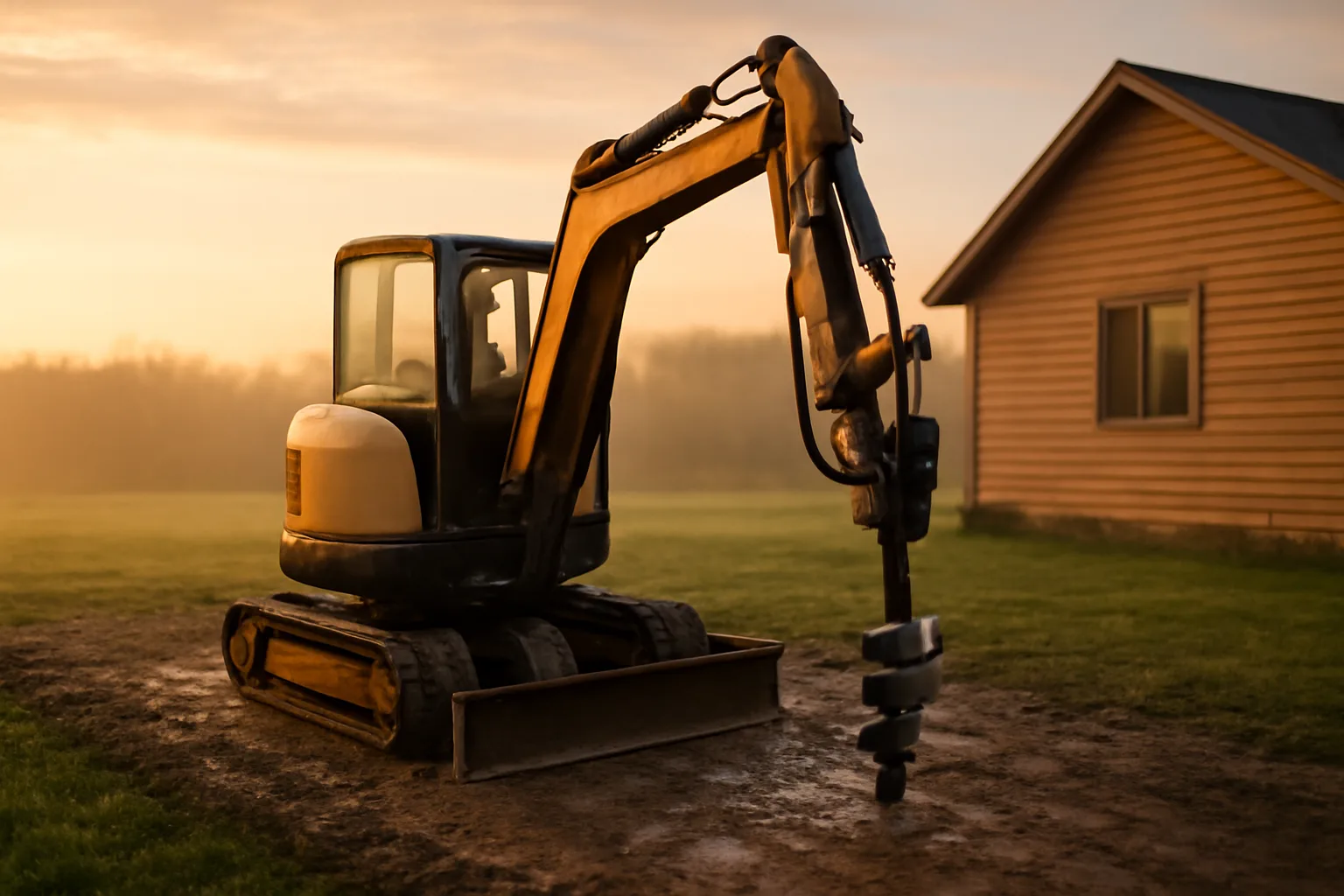
The real start cost is the spread. Used hydraulic drive heads, a skid steer or mini excavator that can take the torque, calibration, piles and extensions, cutoff tools, and a trailer. Public, board-confirmable sticker prices for a full helical pier delaware rig do not exist in one official table. Dealer quotes move with steel and lead time. Get three quotes. Ignore ads that say you can start for pocket change.
Insurance is the other silent check. General liability, hired and non-owned auto, inland marine on the steel, and workers' compensation once you have employees. Premiums are not published as a state fee. Your carrier will price soil work like soil work.
I would rent or subcontract the machine for the first few jobs if capital is tight. Buying a new dedicated rig before you have repeat GC relationships is how people go broke with a shiny gearbox.
Gross receipts tax applies to contractor receipts. The rate is on the Division of Revenue GRT page and it has changed in recent budget years. Build the current rate into every bid. Do not copy last year's spreadsheet.[15]
This is the spot where bid math matters. HelicalPath sells a $199 Stamp + Bid-Math Kit for people who want a paper worksheet. You can also build the same sheet in a notebook: steel, labor at or above the state minimum, GRT, dump fees, PE, permit, contingency.[10]
How much does helical pier cost in Delaware for a house?
There is no official Delaware price list for helical pier work. Anyone selling you a single average cost in Delaware as a fact is guessing. The closest honest statement is that residential underpinning is usually bid per pier (plus brackets, concrete, access, and mobilization), and commercial or new-construction piles are bid from a PE design with a torque criterion.
Soil drives the count. A loose coastal sand lot in Sussex and a stiff clay lot west of Dover will not take the same pile length. Use the NRCS Web Soil Survey as a first look, then decide if you need a geotech. Web Soil Survey is free. A bad soil guess is not.[14]
National consumer sites throw out wide per-pier bands. Treat those as marketing, not as a Dover bid tab. Your number has to clear steel, machine time, labor, GRT, PE, permit, and a reserve for refusal or utilities. Nobody has good public, job-level data for Delaware helical pricing. The closest hard numbers you can put in a bid are your steel quote, your published tax rate, and your wage floor.[10][15]
Homeowners asking how much helical pier costs in Delaware want a house total. You cannot give a responsible house total without a site visit, the existing footing size, and a design. Anyone who quotes a full underpin over the phone is either padding hard or about to lose money.
Waste of money: buying lead lists of houses with cracks and door-knocking without a PE relationship. You will sell jobs you cannot close at the permit desk.
How long does helical pier take in Delaware?
On-site installation for a typical residential helical pier job often fits in one to several working days once the design and permit are in hand. A single new-construction pile cap can be faster. A full perimeter underpin with bad access can run longer. Nobody publishes a statewide average that I trust.
The longer clock is paper. Entity filing can be quick. Contractor licensing, local registration, PE turnaround, and the building permit are the variables. I will not invent a processing time. Confirm each queue with the Division of Revenue, the county, and your PE. No approval timeline is guaranteed.
Weather on Delmarva is real. Winter freeze, nor'easters, and high water tables in Sussex slow torque work. Build calendar slack. Do not promise Friday if you have not called 811 yet.
How long helical pier takes in Delaware is really two clocks. The business start clock (often weeks, sometimes longer, depending on local cards and insurance). The job clock (days on site, plus whatever the permit desk does). Keep those answers separate when a lender or a homeowner asks.
If a client wants a date in the contract, write it as a target after permit issuance, not as a start-from-today promise. That one clause prevents most of the angry Friday calls.
What insurance, wage, and OSHA rules hit a new crew?
If you have employees in Delaware, plan on workers' compensation coverage under Title 19, Chapter 23. Sole proprietors should confirm with the Department of Labor and their carrier whether they can exclude themselves. Do not guess. A helical jobsite is exactly the kind of place a rolled ankle becomes a claim.[9]
Hourly labor cannot come in under the state minimum wage. Delaware's Department of Labor posts the current rate. As of the January 1, 2025 step that rate is $15.00 an hour. Confirm it on the DOL page before you print a hiring flyer, because the statute steps are political and they move.[10]
OSHA still owns the hole. Helical work is not always a trench, but you will cut, expose footings, and work next to unstable soil. 29 CFR 1926.651 is the excavation rule people ignore until someone gets covered. Read it. The same standard also tells you to find utilities before you open the ground, which pairs with Delaware's 811 law.[7]
I-9 and withholding start when you hire. That is federal. Cheap payroll software beats a shoebox.
I would not send a two-person crew to a failed foundation without a written lift plan and a torque log template. That is not a state form. It is how you stay out of a lawsuit when the house does not come back to level.
What codes and product reports do Delaware inspectors want?
Inspectors want a code path they can file. Most Delaware jurisdictions hang residential and commercial work on a locally adopted International Building Code. Helical pile systems are commonly accepted when they have an ICC-ES evaluation under AC358 and the installer follows the PE and the report. Bring the report number, not a brochure.[12]
Torque-to-capacity is the field language. If you cannot show calibrated equipment and a pile log (depth, torque, inclination, termination criterion), you are asking the inspector to trust a story. I would not.
Special inspections show up on commercial work and on some larger residential jobs. Confirm with the building official whether the helical installer can be the special inspector. Often they want a third party.
Do not fight an inspector with manufacturer folklore. Ask what evaluation report they want and bring that. Colorado's start guide is worth a skim if you also chase frost-depth work. Delaware frost is milder. The AC358 logic is the same.
Do you have to call 811 before installing helical piers?
Yes. You call 811 (Miss Utility of Delmarva) before you drive helical piers. Title 26, Chapter 8 is the Underground Utility Damage Prevention and Safety Act. Spinning a steel shaft is excavation for this purpose. "It is only a 3 inch pile" is not a defense when you hit a gas service.[11]
Wait the required time after the ticket. Respect marks. If marks are stale, reclear. Private utilities on the house side (well lines, propane, electric to a shed) are often not marked by the public cut. Budget a private locate on older lots.
Coastal Sussex has more private wells and septic laterals. New Castle suburbs have denser gas. Different risk, same statute. I have no patience for crews that "know the yard." Know the ticket number.
OSHA's excavation rule says the estimated location of utility installations "shall be determined prior to opening an excavation." Pair that federal line with the Delaware ticket and you have the whole utility story.[7]
What does a realistic first year look like on paper?
Year one is renewals and filings, not a victory lap. LLC annual tax is due on the Division of Corporations calendar ($300 as published). The Revenue contractor license and gross receipts filings run on Revenue's calendar. Local contractor cards expire on the county or city calendar. Put all three in one reminder file.[3][15][2]
You will also collect installation records. Torque logs, photos of brackets, PE letters, permit cards, 811 tickets. That folder is how you get paid on a disputed job and how you renew a county card if they ask for work history.
Sales tax is the pleasant Delaware quirk. The state has no general sales tax. You still have GRT. Do not tell a Pennsylvania customer you can skip tax and then forget GRT on the same receipt.[15]
If you hire, add unemployment insurance with the Delaware Department of Labor. Confirm current employer registration on FirstSteps.[13]
Keep the first year boring. Ten clean permitted jobs beat forty cash jobs you cannot show a bonding agent. Bonding, if a GC or public owner asks for it, is a surety product, not a state helical license. Confirm the penal sum they want before you bid.
What would I skip, and what would I not cheap out on?
Skip the national certified-foundation plaques that no Delaware statute names. Skip buying every helix diameter in year one. Skip bidding historic Wilmington brick without a PE who has done brick.
Do not skip the Revenue license, the 811 ticket, workers' comp once you have help, or the PE when the official asks. Those are how companies die.
Want a worksheet so the bid includes GRT and permit friction? The HelicalPath Stamp + Bid-Math Kit is $199 at /start. The rest of this page works if you never click it. HelicalPath is an independent publisher, not a law firm and not a contractor.
Confirm every fee and form with the Division of Revenue, the Division of Corporations, DAPE, and the county that owns the dirt. Boards change packets. No one can honestly promise you an approval date.
Frequently asked questions
Do you need a license for helical pier in Delaware?
Yes. Delaware requires a Division of Revenue contractor license before you take construction receipts, and many jobs also need a local contractor card plus a building permit. There is no statewide general contractor exam. A PE license is separate and is about design, not about running the torque motor. Confirm current forms with Revenue and the county.
How much does helical pier cost in Delaware?
There is no official state price list. Home jobs are usually bid per pier plus brackets, access, concrete, PE, and permit. Business start paper is modest ($90 LLC formation and $300 LLC annual tax as published), while the machine and insurance dwarf those fees. Confirm tax rates and license fees with the Division of Revenue before you bid.
How long does helical pier take in Delaware?
Field work on a typical house often fits in one to several days after the permit and design are in hand. Starting the business is a different clock. Entity filing can be fast. License, local registration, PE, and permit time vary. Confirm each queue with the agency that owns it. Nobody can honestly guarantee a date.
Does Delaware have a statewide general contractor license?
No plastic statewide GC card and no state contractor exam board for this trade. The state-level license is the Division of Revenue contractor license tied to gross receipts tax under Title 30, Chapter 25. Counties and some cities still register contractors on their own. That split surprises people who moved from Florida or California.
Can a handyman install helical piers in Delaware?
Not as a workaround. Once you furnish labor to alter or repair a building foundation, Chapter 25 treats you as a contractor. Structural underpinning also draws building permits and often a PE. A handyman card, where a town even issues one, is the wrong paper for helical piles under a house.
Do I need a PE stamp for residential helical piers?
Often yes. Design of the pile, capacity, and connection to the existing footing is engineering under 24 Del. C. Chapter 28. Some officials accept a Delaware PE letter plus an ICC-ES AC358 report. Manufacturer typical details are not a stamp unless a Delaware PE adopts them. Ask the building official on that lot.
Is there sales tax on helical pier work in Delaware?
Delaware has no general state sales tax. Contractors still pay gross receipts tax on receipts under Title 30. Build the current GRT rate from the Division of Revenue page into the bid. If you also work in Maryland or Pennsylvania, those jobs follow those states' tax rules. Do not mix the three on one invoice.
How much is a Delaware LLC for this work?
The Division of Corporations publishes a $90 certificate of formation fee and a $300 annual LLC tax. Confirm both on the current fee schedule before you file. You still need the Revenue contractor license, and that is a separate check. A registered agent is required if you are not a Delaware resident.
Do I need to call 811 before driving piers?
Yes. Title 26, Chapter 8 requires notice through the approved notification center before excavation or demolition. A helical shaft counts. Wait the legal clearance window, protect the marks, and reclear if they go stale. Private well, septic, and propane lines are often unmarked. Budget a private locate on older lots.
Does New Castle County require its own contractor card?
New Castle County Land Use registers contractors who pull permits there. Confirm the current application, insurance proof, and fee on the county Licenses and Registrations page. That card does not replace the state Revenue license, and it does not travel automatically into Kent County, Sussex County, or an incorporated town.
Can a Maryland contractor do helical work in Delaware?
Yes if you complete Delaware's paper. Foreign-qualify the existing entity with the Division of Corporations, get the Division of Revenue contractor license, and pick up any county or city card for the job. Your Maryland license does not substitute. You still need a Delaware PE if the official wants sealed drawings.
What evaluation report do inspectors want for helical piles?
Many Delaware officials want an ICC-ES evaluation under AC358 for the pile system, plus PE calcs and a field torque log. Bring the report number to the counter. A glossy brochure is not an evaluation report. Ask the building official which report and which special-inspection path they want on that permit.
Do manufacturer certifications replace a Delaware license?
No. Chance, Magnum, IDEAL, and similar installer cards help with warranty and inspector comfort. They are not a Division of Revenue license, not a county contractor card, and not a PE stamp. Get the product training if you want that line. File the state and local paper anyway.
What wage do I have to pay a helper in Delaware?
At least the state minimum wage posted by the Department of Labor. As of the January 1, 2025 step that figure is $15.00 an hour. Confirm the live rate on the DOL minimum-wage page before you hire. If the job is prevailing-wage public work, a higher posted rate controls. Payroll taxes start when you have employees.
Sources
- Delaware Code Title 30 Chapter 25, Contractors: Delaware contractors who furnish labor or labor and materials for construction or repair must operate under the Title 30 contractor license and tax chapter.
- Delaware Division of Revenue, Business Licenses: The Division of Revenue issues the state business and contractor license used to legally take business receipts.
- Delaware Division of Corporations, Fee Schedule: Published LLC certificate of formation fee is $90 and domestic LLC annual tax is $300.
- Delaware Code Title 6 Chapter 18, Limited Liability Company Act: To form a Delaware LLC, one or more authorized persons must execute a certificate of formation filed with the Secretary of State.
- Delaware Code Title 24 Chapter 28, Professional Engineers: The practice of engineering in Delaware, including sealing design documents, requires a Delaware professional engineer license.
- New Castle County, Licenses and Registrations: New Castle County Land Use registers contractors who pull local permits.
- OSHA 29 CFR 1926.651, Specific Excavation Requirements: Employers must locate underground utilities before opening an excavation and protect workers around unstable soil and encumbrances.
- IRS, Apply for an Employer Identification Number (EIN) Online: A federal EIN can be obtained at no charge through the IRS online application.
- Delaware Code Title 19 Chapter 23, Workers' Compensation: Delaware employers covered by Chapter 23 must carry workers' compensation for employees.
- Delaware Department of Labor, Minimum Wage: Delaware's posted state minimum wage is $15.00 an hour as of the January 1, 2025 step.
- Delaware Code Title 26 Chapter 8, Underground Utility Damage Prevention: Excavation in Delaware requires prior notice through the approved 811 notification center.
- ICC-ES, Acceptance Criteria AC358 Helical Foundation Systems: Helical pile systems are evaluated for building-code acceptance under ICC-ES AC358.
- State of Delaware, FirstSteps business portal: Delaware FirstSteps is the state portal for starting a business and reaching Revenue license accounts.
- USDA NRCS, Web Soil Survey: NRCS Web Soil Survey is the public first-look source for mapped soil conditions used in pile planning.
- Delaware Division of Revenue, Gross Receipts Tax: Delaware contractors pay gross receipts tax on business receipts in place of a general state sales tax.